

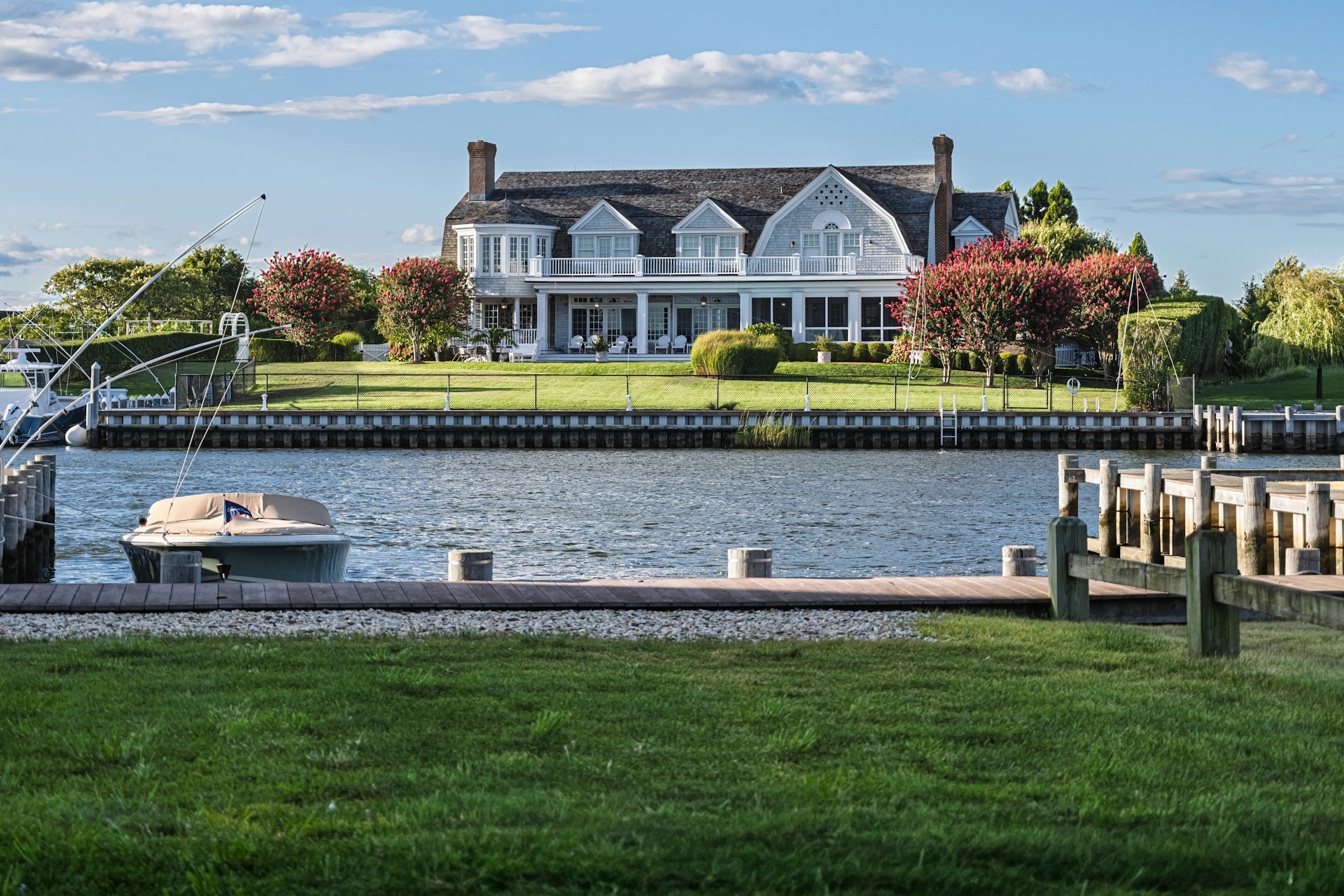
If your home is within a few kilometres of the ocean, the salt air, wind exposure, and persistent humidity that make coastal life appealing are working on your house in ways that are easy to ignore until they aren’t.
This isn’t unique to any one part of Vancouver Island. Whether you’re on the east coast near Comox or Cowichan Bay, or on the more exposed west side near Ucluelet or Tofino, proximity to the water brings a specific set of conditions that affect how your home performs over time.
Salt Air and Building Materials
Salt air accelerates corrosion and material breakdown. Metal components in a home’s structure, fasteners, flashing, and mechanical systems show wear faster in coastal environments than they do inland. That part is relatively well known.
Less discussed is what salt air and high humidity do to insulation over time.
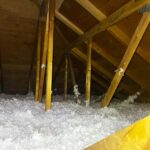
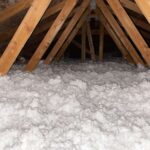
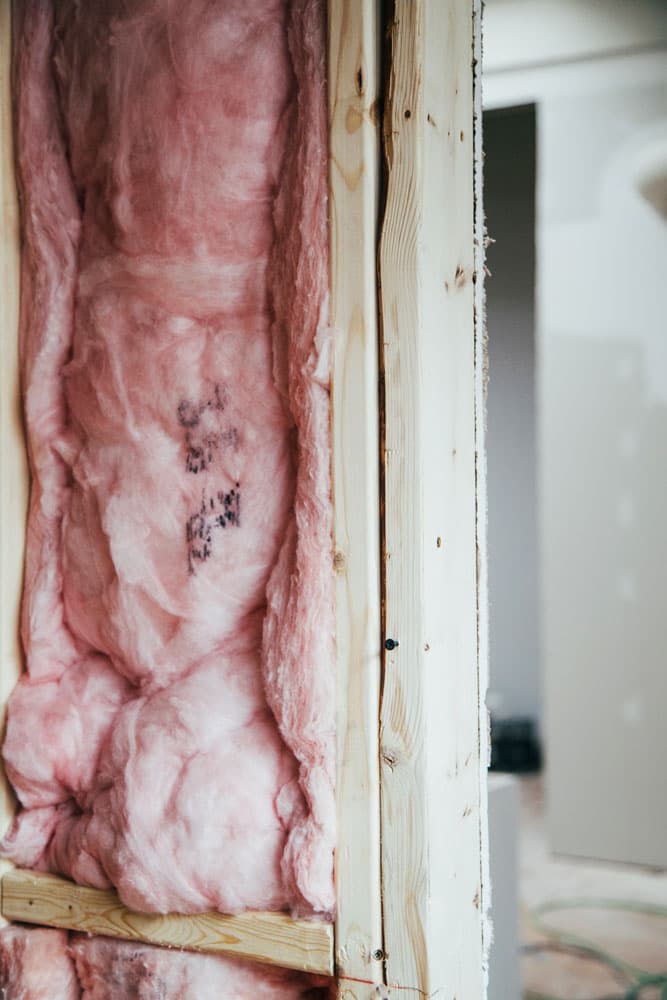
Fibreglass insulation in a coastal environment can absorb airborne moisture and hold it. Once that happens, the insulation loses its effectiveness and can begin to contribute to the moisture accumulation in wall and attic cavities rather than preventing it.
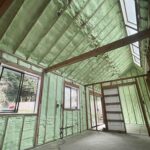
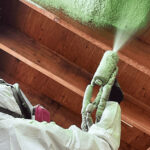
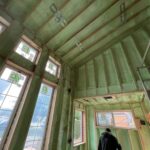
Spray foam handles this differently. Because it forms a continuous, adhered seal rather than sitting loosely in a cavity, it doesn’t provide the same surface area for moisture to collect on.
Closed-cell foam in particular has a very low vapour permeance rating, meaning it resists moisture movement through the material itself.
Wind Exposure and Air Leakage
Homes on exposed sections of the Island deal with wind in a way that sheltered inland homes don’t. Wind-driven rain finds gaps in siding, eaves, and foundation interfaces that wouldn’t matter much in calmer conditions.
Wind pressure also increases air infiltration through the building envelope, which means heated indoor air escapes faster, and outdoor air, cold and often damp, pushes in.
Air sealing is the part of insulation work that most homeowners don’t think about, but in windy coastal conditions, it accounts for a substantial portion of heat loss and moisture risk. Spray foam applied at rim joists, the attic floor perimeter, and other transition points in the building envelope addresses air movement directly, not just thermal resistance.
A home with high R-value insulation but poor air sealing still loses heat and accumulates moisture. The two have to work together, and that combination matters more on an exposed coastal site than it does in a sheltered suburban neighbourhood.
Crawl Spaces in Coastal Homes
Many older homes near the Island’s waterfront were built on crawl space foundations. These spaces often go uninspected for years, which is a problem in a climate where moisture finds every opportunity.
Ground moisture, tidal influence on the water table in some areas, and salt-laden air all affect what happens in an uninsulated or inadequately insulated crawl space.
Closing and insulating a crawl space with spray foam removes it from the exterior environment and makes it far easier to manage. It also eliminates many of the entry points that pests use, which tends to be a welcome side effect for homeowners closer to wooded or waterfront areas.
Get Started on Coastal Home Insulation
Coastal homes need insulation solutions that account for what they’re actually dealing with. HD Horne Sprayfoam & Insulation understands the conditions Vancouver Island properties face and works with homeowners to find the right approach for each home’s exposure, age, and layout.
Get in touch to schedule an assessment.