


Most Canadians think about insulation in terms of cold. If you survive a Winnipeg winter, you understand viscerally why a well-insulated home matters. But Vancouver Island doesn’t have Winnipeg winters, and that’s actually part of the problem.
Because temperatures rarely dip below freezing for long, Island homeowners tend to underestimate how much their insulation is working against them. The issue here isn’t extreme cold. It’s relentless, year-round moisture, and insulation that wasn’t designed with that in mind.
Why “Mild” Doesn’t Mean Easy on a Home
The west coast of Vancouver Island receives some of the highest rainfall totals in Canada. Even in drier areas like the Cowichan Valley or the Gulf Islands, annual precipitation sits well above the national average.
Add to that the marine air, the morning fog that rolls in off the Strait, and the general dampness that defines coastal living, and you have a climate that puts constant pressure on a home’s building envelope.
Insulation in this environment has a job that goes beyond keeping heat in. It has to manage vapour movement. When warm, humid indoor air meets a cold surface inside a wall or attic, it condenses. Do that repeatedly over months and years, and you get moisture accumulation in places you can’t see, which leads to mould, rot, and structural damage long before anything shows up on the surface.
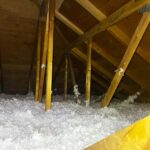
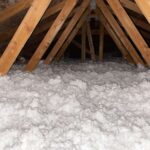
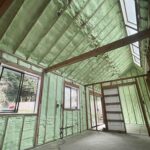
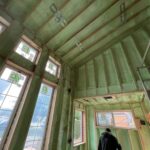
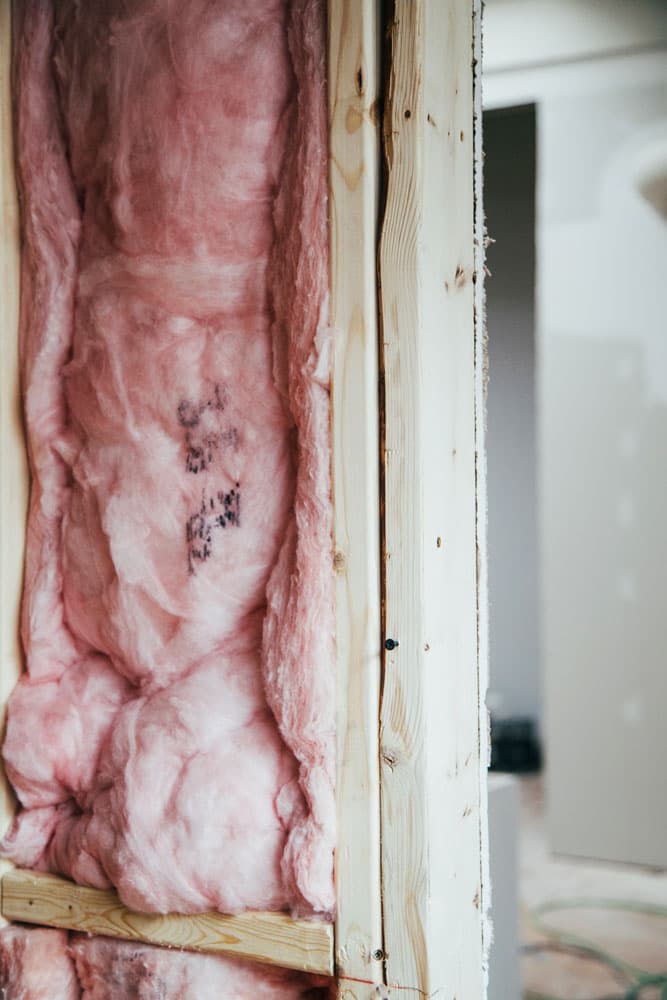
Fibreglass batts, which are still common in older Island homes, absorb moisture rather than resist it. Once wet, they lose R-value and can hold that moisture against wood framing indefinitely. Spray foam, by contrast, creates an air seal at the point of application and doesn’t absorb moisture at all.
The Homes Most at Risk
A considerable portion of Vancouver Island’s housing stock was built during the postwar boom and through the 1970s and 80s. These homes were built to the standards of their time, which prioritized basic thermal performance without much consideration for air sealing or vapour management.
Homes in this age range often have insulation that’s compressed, settled, or degraded. Vapour barriers, if they exist, may be damaged or improperly installed. Rim joists and crawl spaces are frequently uninsulated entirely. These gaps weren’t a crisis in 1975, but after 40 or 50 years of a wet coastal climate, the cumulative effect on the structure can be major.
Newer builds aren’t automatically exempt. Construction practices improved, but Island homes still need insulation solutions calibrated to marine conditions rather than generic Canadian building assumptions.
What This Means for Homeowners
Insulation considerations are specific, and a generic approach tends to miss them.
An attic that looks fine from the hatch may have moisture accumulating at the eaves. A crawl space with batts stapled between joists may be holding water against the subfloor right now. What might seem like dramatic failures are actually the slow, quiet results of insulation that was never quite matched to the climate in which it was installed.
Get Started on the Right Insulation for Your Home
HD Horne Sprayfoam & Insulation works specifically with Vancouver Island homeowners, which means the assessment starts with your climate and your home’s construction instead of a generic checklist.
If your home is more than 20 years old, or if you’ve noticed cold floors, moisture smells, or inconsistent temperatures between rooms, it’s worth getting eyes on your insulation.
Reach out to book an assessment.