


Ask a homeowner on Vancouver Island why they haven’t upgraded their insulation, and a common answer goes something like this: “It doesn’t really get that cold here.”
Compared to the Prairies or the BC interior, that’s true enough. But it misses the point of what insulation is actually doing in a coastal home, and why the mildness of the climate doesn’t reduce the need for it.
If anything, the specific conditions of Vancouver Island’s climate create insulation challenges that colder, drier regions don’t face in quite the same way.
Temperature Isn’t the Whole Story
The traditional framing of insulation is almost entirely about cold. Insulation keeps heat in during the winter and out during the summer, and the colder the climate, the more insulation you need.
That logic is sound as far as it goes, but it leaves out the other half of the picture: moisture.
On Vancouver Island, annual rainfall in many areas exceeds 1,500 millimetres. The region sees months of persistent dampness, high relative humidity, and the kind of grey, saturated weather that drives moisture into building materials over time.
Insulation in this environment isn’t just a thermal barrier. It’s part of a home’s moisture management system.
A well-insulated, well-sealed building envelope resists condensation, limits the movement of moist air into wall cavities and crawl spaces, and reduces the risk of mould growth in areas that rarely see sunlight or airflow.
The Condensation Problem
Here’s what happens in an under-insulated coastal home during a typical Vancouver Island winter.
Warm air from your heated interior moves toward the colder surfaces at the edges of the building, your walls, your crawl space, your attic, and when that warm, moisture-laden air hits a cold surface, it condenses.
That condensation, repeated over weeks and months, is what creates the conditions for mould, wood rot, and deteriorating insulation. It doesn’t require freezing temperatures.
It just requires a sufficient difference between the warm interior air and the cold surface it encounters, something Vancouver Island winters produce reliably, even at mild temperatures.
Older Homes Are Especially Vulnerable
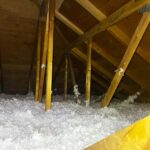
A large portion of the housing stock on Vancouver Island was built before modern insulation standards were in place.
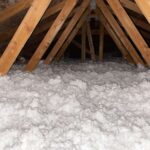
Many homes from the 1970s and earlier were constructed with minimal crawl space insulation, inadequate attic coverage, and no real consideration of air sealing.
In a cold climate, the performance gaps in those homes are immediately obvious. Residents feel the cold, the drafts, the high bills.
On Vancouver Island, the same gaps are present, but the mild temperatures make them easier to overlook. The moisture damage, however, continues regardless of whether the occupants feel cold.
Get Started on Insulating for a Coastal Climate
The conversation around insulation on Vancouver Island shouldn’t start with how cold it gets. It should start with how wet it gets, because that’s the question that actually determines how well your home is performing.
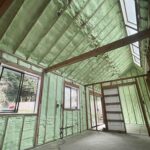
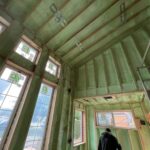
A professional assessment from HD Horne Sprayfoam and Insulation will identify where your home is vulnerable to moisture-driven heat loss and condensation, and what insulation measures will make the greatest difference for your specific situation.
Call us now so we can help!