

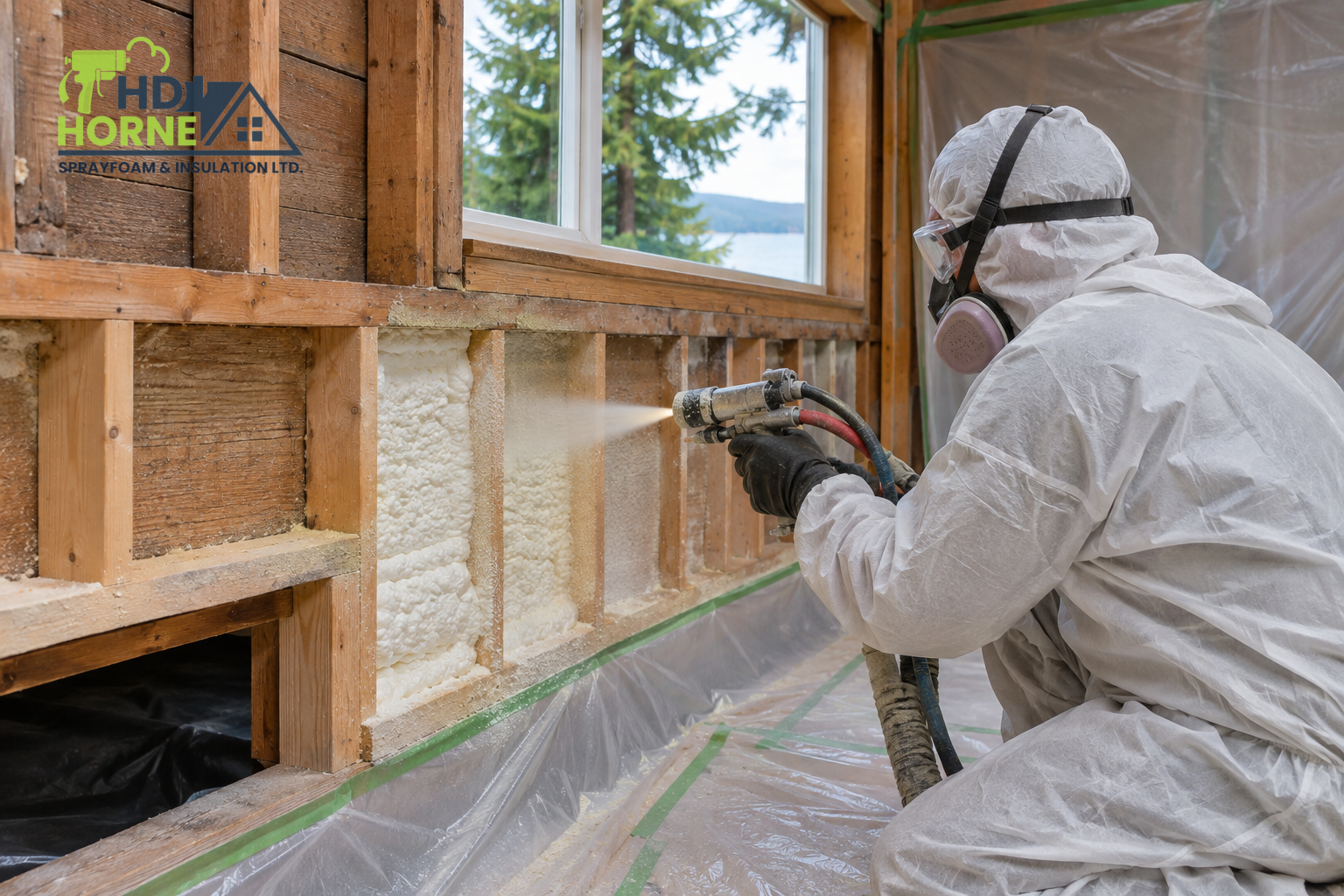
Homes in Ladysmith and Chemainus range from compact mid-century houses to rural properties, additions and newer builds with complicated rooflines. Their insulation needs are just as varied. A cold floor, drafty room or high heating demand may point to an insulation problem, but the right fix depends on where the home’s air and thermal boundaries are located.
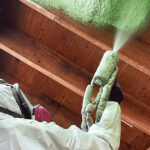
Spray foam insulation can be especially useful in retrofit work because it adheres to the surface and expands around irregular framing, small penetrations and difficult transitions. That allows it to add thermal resistance while also limiting unintended air movement in the area being treated.
That does not mean every cavity should be filled with spray foam. A well-planned retrofit uses the material where its fit and air-sealing qualities solve a specific problem, while batt or blown-in insulation may remain the practical choice in straightforward areas.
Why Local Retrofit Conditions Matter
Properties around Ladysmith, Saltair, Chemainus and Crofton often include a mix of original construction and later renovations. An older section may have shallow framing or loosely fitted batts, while an addition may use a different insulation and air-barrier approach. The connection between those sections can become a weak point.
Coastal weather also makes preparation important. Insulation should not be installed over an active roof leak, foundation seepage, wet sheathing or damaged wood. Those conditions need to be identified, repaired and allowed to dry before the insulation assembly is completed.
A local insulation assessment should therefore begin with the house, not the product. The goal is to find where heat and air are moving, determine which surfaces are suitable for insulation and build a scope that fits the actual construction.
Where Spray Foam Can Add the Most Value
Rim joists and foundation transitions
The rim joist is the band of framing around the top of the foundation. It contains joints, corners and service penetrations that are difficult to seal with pieces of batt insulation alone. When the surface is accessible and dry, spray foam can create a continuous layer across these irregular details.
Treating this area can help reduce drafts near exterior walls and cold floors above a basement or crawl space. The installation still needs to respect access requirements, clearances and any protective covering required for the finished space.
Crawl spaces
A crawl-space project should start with water management, drainage, ground moisture and the condition of the framing. Spray foam can be useful at foundation walls, rim joists or the underside of a floor, but those are different strategies. The correct location depends on whether the crawl space is intended to remain outside the home’s conditioned enclosure or become part of it.
Vents, mechanical equipment and combustion appliances also affect the plan. Closing openings without reviewing the whole space can create new problems, so air sealing, insulation and ventilation decisions should be coordinated rather than handled one at a time.
Open walls during renovations
When drywall or other finishes are already being removed, the framing is visible and easier to inspect. That creates an opportunity to repair leaks, update services and improve continuity at corners, headers and old-to-new connections before the wall is closed again.
Spray foam may suit irregular or shallow cavities where a continuous fit is difficult to achieve with cut materials. In simple, full-depth stud bays, correctly installed batt insulation may be a cost-effective alternative. The choice should follow the wall design and the condition of the exposed surfaces.
Complex rooflines and attic transitions
Vaulted ceilings, dormers, dropped soffits and additions can create narrow connections between the living space and attic. Targeted spray foam may help at accessible transitions where air sealing is difficult. A conventional open attic, however, may be better served by sealing specific penetrations and then installing suitable blown-in insulation across the attic floor.
If a proposal would move the insulation boundary from the attic floor to the underside of the roof, the change needs a full review. Roof condition, ventilation, moisture control and any equipment in the attic all matter. Spray foam should not block intended ventilation paths or conceal a roof problem.
What Spray Foam Changes in a Retrofit
Traditional insulation is primarily intended to slow heat flow. Spray foam also limits air movement through the area it covers. That distinction matters because a house can have plenty of insulation and still feel uncomfortable if air bypasses it through gaps at framing joints, wiring holes, plumbing penetrations or attic hatches.
A continuous layer can help:
- Reduce drafts at the treated part of the building enclosure.
- Make surface temperatures more consistent near floors, walls or ceilings.
- Limit warm indoor air from reaching cold concealed surfaces through air leaks.
- Fill irregular spaces that are difficult to fit with rigid or fibrous insulation.
These benefits depend on proper design, suitable surfaces and consistent installation. Spray foam is not a repair for exterior water entry, and it should not be used to hide mould, pest contamination or deteriorated materials.
When Batt or Blown-In Insulation May Be the Better Fit
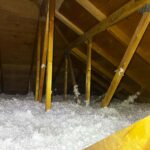
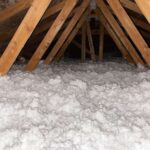
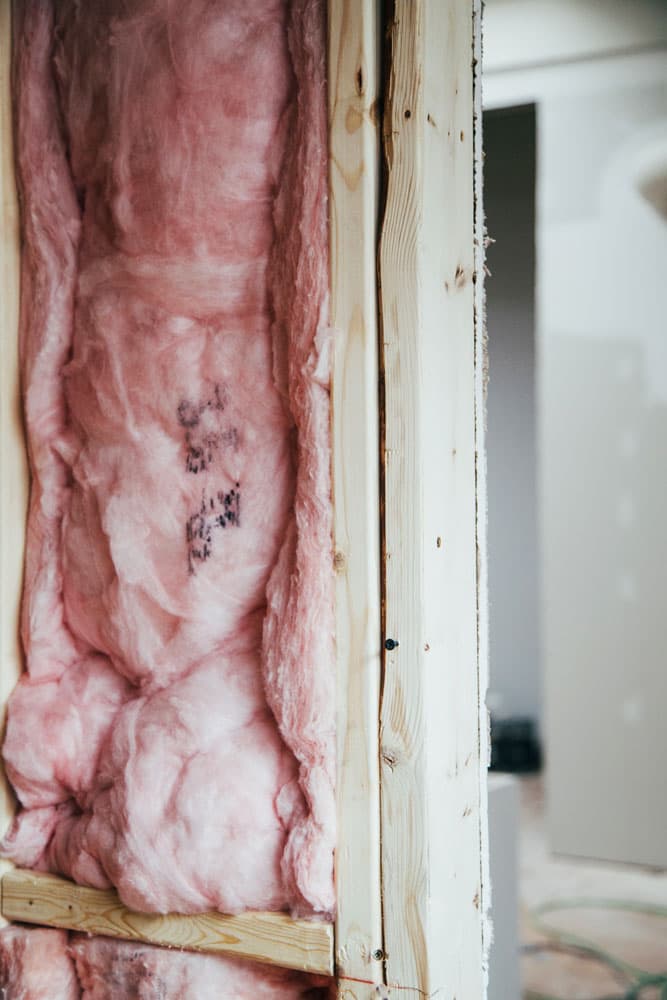
A practical retrofit does not need to use one product everywhere. Batt insulation can perform well in open, regular framing when it is cut accurately and installed without gaps, compression or obstructions. Blown-in insulation can provide even coverage across a conventional attic after leaks, baffles and access details have been addressed.
A hybrid scope may use spray foam at rim joists and awkward transitions, batts in accessible wall cavities and blown-in material on the attic floor. Each product has a defined job, and the layers must connect so the home’s air and thermal boundaries remain continuous.
Before Booking the Work
A useful site review should answer the following questions:
- What comfort or performance problem is the project meant to solve?
- Where are the existing air barrier and insulation layers?
- Are the surfaces dry, clean, sound and accessible?
- Do roof, plumbing, drainage or pest issues need attention first?
- Will the work affect attic ventilation, crawl-space vents or mechanical equipment?
- Are electrical and plumbing changes complete in the area to be sprayed?
- What clearances, inspections and protective finishes apply to this assembly?
- What areas should use spray foam, and where would batt or blown-in insulation be more appropriate?
Clear answers make it easier to compare proposals and avoid covering an unresolved problem. They also help the installer coordinate with other trades before access becomes limited.
Plan a Focused Insulation Retrofit
The best retrofit is not necessarily the one that adds the most material. It is the one that identifies the weak points, prepares them properly and connects the new work to the rest of the building enclosure.
If you are planning an insulation upgrade in Ladysmith, Saltair, Chemainus, Crofton or a nearby Vancouver Island community, HD Horne Sprayfoam & Insulation Ltd. can assess the accessible areas and explain where spray foam, batt or blown-in insulation may fit. Contact the team to discuss a practical scope for your home.