

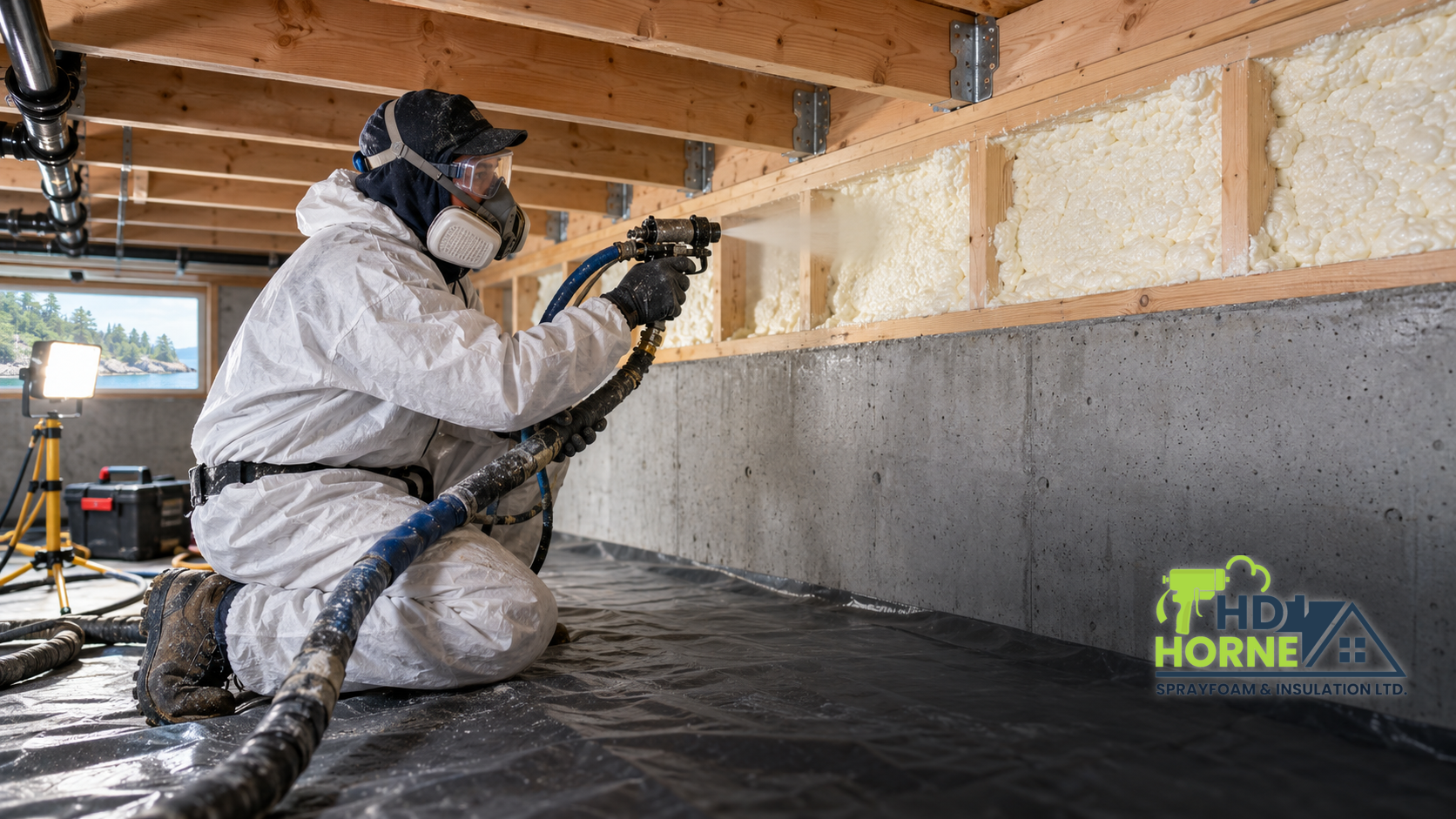
Spray foam insulation is known for combining thermal resistance with air sealing, but that does not mean every retrofit should begin with a plan to spray the entire house. In many Vancouver Island homes, the best results come from using spray foam where its ability to seal irregular shapes and hard-to-detail transitions solves a specific problem.
That targeted approach matters in older houses, additions and coastal properties, where the weak points are often concentrated around the edges of the building rather than spread evenly across every wall. The right question is not simply, “Is spray foam good?” It is, “Where will spray foam improve this particular home’s building envelope?”
1. Rim joists and the top of foundation walls
The rim joist runs around the perimeter where the floor framing meets the foundation. It contains many joints between wood, concrete, plates and service penetrations, which makes it a common path for air leakage. In fall and winter, homeowners may notice cool floors or drafts near exterior walls. In warmer weather, humid outdoor air can also move through the same gaps.
Because spray foam adheres to the substrate and conforms around framing, it can create a more continuous layer than pieces of rigid insulation or batts that are difficult to fit tightly in every bay. The installer still needs to account for wood condition, moisture, clearances and any areas that must remain accessible.
2. Irregular penetrations and construction transitions
Plumbing lines, wiring, exhaust ducts and structural connections interrupt otherwise simple insulation cavities. So do transitions between a main house and an addition, or between a wall and a sloped roof. These are places where small gaps can create outsized comfort problems.
Spray foam can be valuable when conventional materials would require many separate cuts and joints. Its strength is continuity. Used thoughtfully, it can connect the air-control layer across awkward geometry instead of leaving a patchwork of small openings.
3. Crawl spaces and certain foundation-wall assemblies
Vancouver Island crawl spaces range from dry, accessible service areas to tight spaces affected by damp soil, drainage problems or exterior air. There is no single insulation detail that fits all of them.
In an appropriate assembly, closed-cell spray foam may be used on foundation walls or at floor-perimeter details to reduce air movement and improve thermal performance. Before any insulation is installed, active water entry, plumbing leaks, drainage issues and damaged wood need to be addressed. Ventilation, vapour control and code requirements also have to be considered as part of the whole crawl-space plan.
4. Complex rooflines, vaulted ceilings and attic transitions
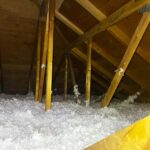
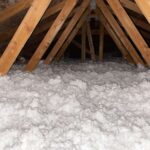
A simple open attic often allows more than one good insulation strategy. Air sealing at the ceiling plane combined with properly installed blown-in insulation can be an effective option when the attic configuration supports it.
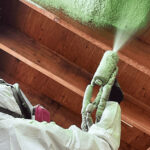
Spray foam becomes especially useful where the roofline is complex, access is limited, or the design calls for insulation at the roof deck rather than the attic floor. Vaulted ceilings, dormers and roof-to-wall intersections demand careful detailing because insulation, ventilation and moisture control must work together. These are design decisions for a qualified professional, not places to guess from a product label.
5. Floors over garages, cantilevers and additions
Rooms over garages and projecting floor sections often feel different from the rest of the home because several surfaces are exposed to outdoor or unconditioned air. Older additions may also have discontinuous insulation where the new framing meets the original house.
Spray foam can help seal joist ends, irregular bays and transitions that are difficult to reach with cut-and-fit materials. Depending on access and the intended assembly, batt or blown-in insulation may still make sense across larger, regular areas. A hybrid solution can use each material where it performs best.
6. Workshops, garages and other hard-to-condition spaces
Detached workshops and garages are common throughout the Cowichan Valley and communities between Victoria and Nanaimo. When these spaces are heated, cooled or used for moisture-sensitive storage, air leakage through rooflines, wall transitions and overhead-door framing can make comfort difficult to maintain.
Spray foam may help at complex edges and roof assemblies, but insulation should be planned around how the space is actually used. A periodically heated workshop has different requirements from a finished studio or a garage attached to the home.
When another insulation material may be the better fit
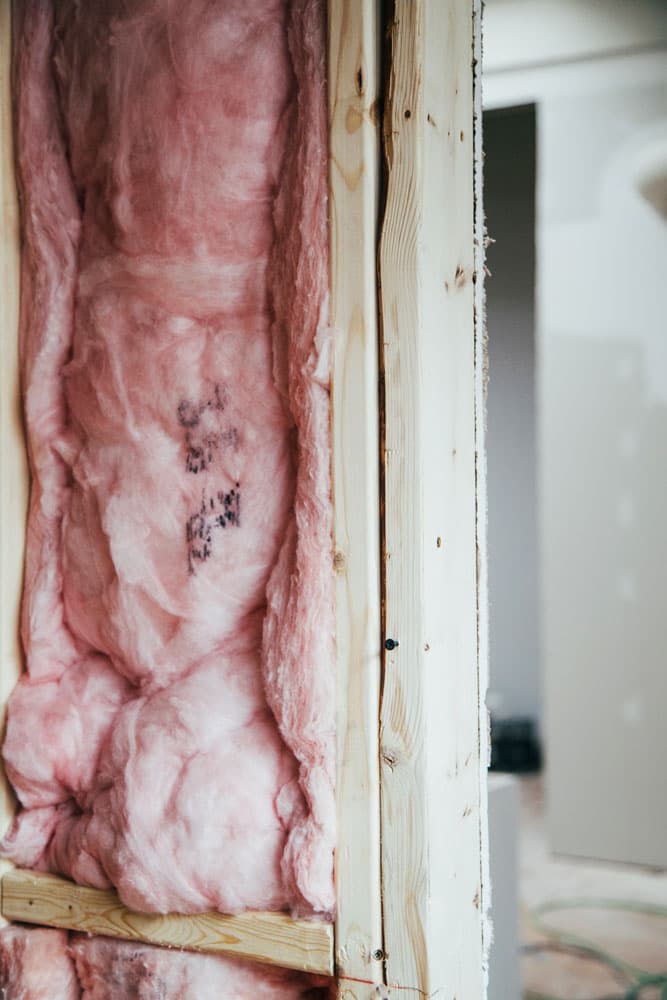
Spray foam is a strong tool, not a universal default. Blown-in fibreglass can provide efficient, even coverage across an accessible attic after air leaks are addressed. Batt insulation can be practical in open, regular wall, ceiling and floor cavities where it can be cut and fitted without gaps or compression. Insulation removal may also be needed when existing material is contaminated, damaged or preventing proper access to the assembly.
The most effective retrofit may combine materials. For example, targeted spray foam can seal rim joists and penetrations while blown-in insulation improves attic coverage. What matters is continuity across the building envelope, compatible materials and installation that matches the home.
Questions to ask before choosing spray foam
- What comfort, air-leakage or moisture problem are we trying to solve?
- Where will the insulation and air-control layers run continuously?
- Does any water entry, drainage or wood damage need repair first?
- How will the proposed work interact with attic ventilation, mechanical systems and required clearances?
- Which areas are better suited to spray foam, blown-in insulation or batts?
- How will the installed work be checked for coverage, depth and quality?
A clear proposal should connect the recommended material to the condition of the home. It should also explain surface preparation, access, occupant and site protection, and what areas will remain visible or need finishing after the insulation work.
Start with the house, not the product
The biggest gains usually come from finding the real weak points first. That may be the rim joist in a Duncan bungalow, a vaulted ceiling in a Cobble Hill addition, or the attic and garage transition in a Nanaimo family home. Once the assembly is understood, spray foam can be placed where its air-sealing and insulating qualities are most useful.
HD Horne Sprayfoam & Insulation Ltd. offers spray foam, blown-in and batt insulation, as well as insulation removal, for residential and commercial properties on Vancouver Island. Contact the team for an on-site assessment and a recommendation based on your building, your comfort concerns and the way you use the space.