
There is a particular kind of morning we get during a bad BC smoke event. The sun looks like an old copper coin. The light turns flat. You step outside in Sooke, Langford, Mill Bay, or the Cowichan Valley and smell a campfire, except there is no campfire nearby and nothing about it feels pleasant.
So you close the windows. You put a towel against the drafty back door. You run the air purifier and hope the house can hold its breath until the wind changes.
That is where insulation enters the conversation, but perhaps not in the way most people expect.
Insulation can help a home maintain a steadier temperature while windows are shut, and some insulation systems are also excellent air-sealing systems. But insulation is not an air purifier. If smoke reaches an attic or wall cavity, exposed insulation can collect fine particles and odour. Whether it needs cleaning, air sealing, or replacement depends on how much smoke entered, what type of insulation is present, and whether residue remains after the event.
Smoke Does Not Need Flames to Get Into a House
Wildfire smoke contains fine particulate matter known as PM2.5. These particles are small enough to travel long distances and enter homes through open doors and windows, outdoor-air intakes, and the little gaps a homeowner rarely sees: a tired weatherstrip, a plumbing penetration, a cable hole, or an attic hatch that never quite sits flat.
On Vancouver Island, many attics are vented on purpose. Soffit, ridge, and gable vents help the roof assembly manage heat and moisture. During a smoke event, that also means outdoor air can move through the attic. The important boundary is the ceiling plane between that attic and the rooms below.
If the ceiling plane is well sealed, smoky attic air has fewer routes into the living space. If it is leaky around wiring, ductwork, recessed fixtures, plumbing stacks, or the attic access, indoor air quality can suffer. Fibreglass batts or loose-fill insulation may slow some air movement, but they are not reliable air barriers by themselves.
Can Insulation Become a “Smoke Sponge”? Sometimes.
The phrase is memorable because it describes a real possibility: porous, exposed materials can collect smoke particles and odour. It becomes misleading when it is used to declare every smoky attic a total loss.
A few hazy days from a distant fire do not automatically mean all attic insulation must come out. At the other end of the spectrum, a home close to a wildfire, exposed to dense smoke for days, or left with visible soot and a stubborn odour deserves a professional inspection. Distance, duration, particle load, air leakage, moisture, and the insulation material all matter.
Fibreglass and cellulose
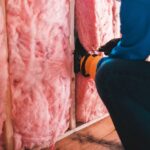
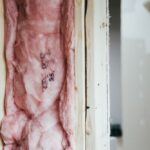
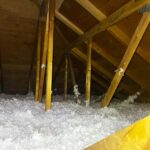
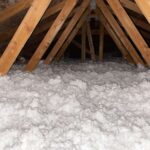
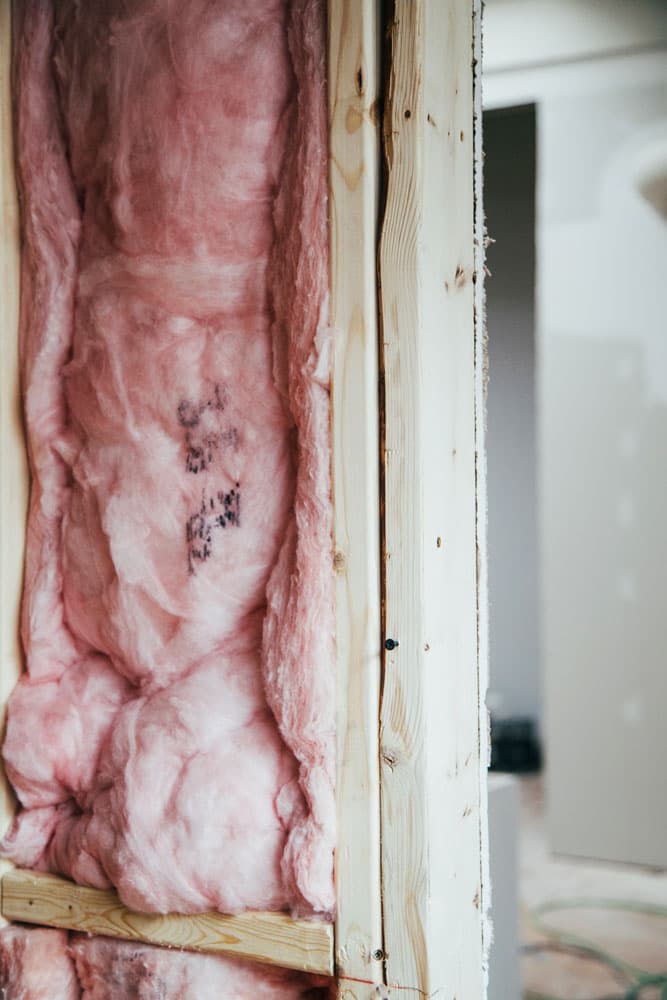
Batts and loose-fill products have a large amount of exposed surface area. When smoke-laden air circulates through an attic, particles can settle on and among the fibres. Heavy contamination can be difficult to remove evenly without disturbing the material, so replacement may be the practical recommendation in a seriously affected area. That is an assessment, not a rule.
Closed-cell spray foam
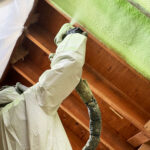
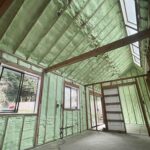
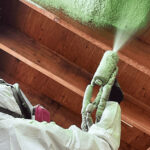
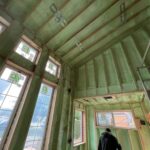
Closed-cell spray foam is dense and, when installed as part of a suitable assembly, can provide insulation and air sealing in one layer. Smoke residue is more likely to remain near its surface than to travel deep into an open bed of loose fibres. In some cases, professional surface cleaning may be possible. Any fire-protective coating and the foam itself still need to be inspected before someone decides to clean, seal, or replace them.
One more honest point: spray foam cannot stop smoke that comes through an open door, a ventilation intake, or gaps elsewhere in the building envelope. A house performs as a system. The best insulation in one part of the home cannot compensate for every leak in another.
R-Value and Cleanliness Are Two Different Questions
Smoke exposure does not necessarily erase insulation’s R-value. Dry insulation may continue resisting heat flow while still carrying surface residue or odour. Conversely, insulation that has been soaked during firefighting, compressed, displaced, or damaged can have a thermal problem as well as a cleanup problem.
This is why “it still looks fluffy” is not a complete inspection, and neither is a quick sniff at the attic hatch. Odour is useful evidence, but it is not a laboratory test. A good assessment considers the source and severity of exposure, visible deposition, moisture, the condition of the material, air leakage paths, and what is happening in the occupied rooms.
What to Do While the Smoke Is Here
During an active smoke event, the immediate goal is cleaner indoor air, not an attic renovation.
- Keep windows and exterior doors closed when outdoor air quality is poor, provided the home does not become dangerously hot.
- Set a compatible HVAC system to recirculate and use the highest-efficiency filter the system can safely accommodate. Health Canada points to MERV 13 or higher for systems designed to handle it; an HVAC professional can confirm what your equipment can manage.
- Run a correctly sized portable HEPA air cleaner in the room where household members spend the most time.
- Limit bathroom and kitchen exhaust fans when they are not needed. Exhausting indoor air can pull smoky outdoor air through leaks.
- Avoid adding particles indoors. Skip candles, incense, smoking, and ordinary vacuuming while outdoor smoke is heavy. Wet wiping and wet mopping are better for settled dust.
- Follow the BC Air Quality Health Index and local emergency instructions. If authorities issue an evacuation order, insulation is not the priority. Leave.
Do not tape over or permanently block attic vents as a quick fix. Those vents are part of the roof’s moisture and heat-management strategy. And do not climb into a smoky attic to investigate while the air is poor. There will be time to inspect safely after the plume moves on.
After the Air Clears: Start With Clues, Not Demolition
A smoky week can make anyone want to tear into the house. Pause before you do. Begin with a simple record of what happened.
- Note the dates and severity of the smoke event and save local air-quality advisories.
- Photograph visible residue, damaged filters, stained attic surfaces, or disturbed insulation.
- Replace overloaded HVAC filters according to the equipment manufacturer’s instructions.
- Check whether odour is strongest near the attic hatch, ceiling penetrations, return-air grilles, or upper-floor rooms.
- If you use an indoor PM2.5 monitor, compare readings when outdoor air improves and watch whether indoor levels fall as expected.
If the smell persists, soot is visible, or anyone in the household has ongoing symptoms, bring in the right professionals. A smoke-remediation specialist can assess residue and cleanup needs. An insulation contractor can examine the material, coverage, and air-leakage details. An HVAC professional can check filtration, ducts, and outdoor-air settings. For health symptoms, speak with a healthcare professional.
A household shop vacuum is not a smoke-remediation plan. It can stir fine material into the air, and careless walking in an attic can compress insulation or put a foot through the ceiling. Some jobs are worth doing once, with proper containment and HEPA equipment.
When Does Insulation Need to Be Replaced?
There is no honest answer based on smell alone. These three scenarios are a more useful starting point:
- Light regional smoke, no visible residue, no lasting odour: wholesale insulation removal may not be warranted. Focus on filtration and finding obvious air leaks.
- Prolonged or heavy smoke, persistent odour, visible soot or ash: arrange a professional assessment. Heavily affected fibrous insulation may be difficult to clean consistently and could require removal.
- Direct fire exposure, firefighting water, charring, or structural damage: treat the space as a fire-restoration project. Do not enter until authorities say it is safe, and coordinate with qualified restoration, electrical, structural, and insurance professionals.
Cleaning and replacement are not moral victories. The right choice is the one supported by the actual condition of the home. Removing clean material creates cost and waste; leaving heavily affected material in place can leave a source of residue and odour. Evidence should decide.
The Upgrade That Matters Before the Next Smoke Season
If insulation is removed, do not rush to bury the same gaps under fresh material. This is the moment to air-seal the ceiling plane: the attic hatch, top plates, wiring and plumbing penetrations, duct chases, and other openings between the attic and living space. Some penetrations, especially around chimneys, flues, and heat-producing fixtures, require code-appropriate, fire-rated details and professional judgment.
Depending on the home, the solution might involve targeted air sealing followed by new blown-in or batt insulation. In other assemblies, closed-cell spray foam may provide both thermal resistance and a continuous air barrier. The correct approach depends on roof design, ventilation, moisture control, existing materials, and local code requirements.
A tighter home is useful during smoke season because it gives outdoor particles fewer uncontrolled paths inside. It also needs deliberate ventilation and filtration when conditions improve. Airtightness is not about sealing a house forever; it is about deciding where the air comes from and how it is cleaned.
A Practical Note About Insurance
If you suspect wildfire smoke has damaged your insulation, contact your insurer before authorizing removal. Coverage depends on the policy and the facts of the loss. Document the event, keep photographs and receipts, and ask the assigned claims adjuster what inspections or remediation costs require advance approval. Insurance Bureau of Canada also recommends using properly trained and insured service providers and checking coverage before work begins.
Let Your House Exhale, Carefully
When the Island sky finally turns blue again, the first instinct is to fling open every window. Wait until local outdoor air readings have genuinely improved, then bring in fresh air and return ventilation equipment to its normal setting. Replace dirty filters, clean settled dust with methods that do not throw it back into the room, and pay attention to any odour that refuses to leave.
Wildfire smoke is unsettling partly because it makes the air itself feel unreliable. A careful inspection can replace that uncertainty with a plan.
HD Horne Sprayfoam & Insulation Ltd. helps homeowners across South Vancouver Island assess attic insulation, identify air-sealing opportunities, and choose appropriate spray foam, blown-in, or batt insulation solutions. If your home in Greater Victoria, the West Shore, Sooke, Mill Bay, or the Cowichan Valley still smells smoky after the air clears, call 250-882-4629 to arrange an insulation assessment. If significant smoke contamination is suspected, we can help clarify where an insulation contractor fits within a broader remediation plan.